
Airfare spikes, delays and overbooked flights are hitting travelers hard. Here’s how to not get burned.
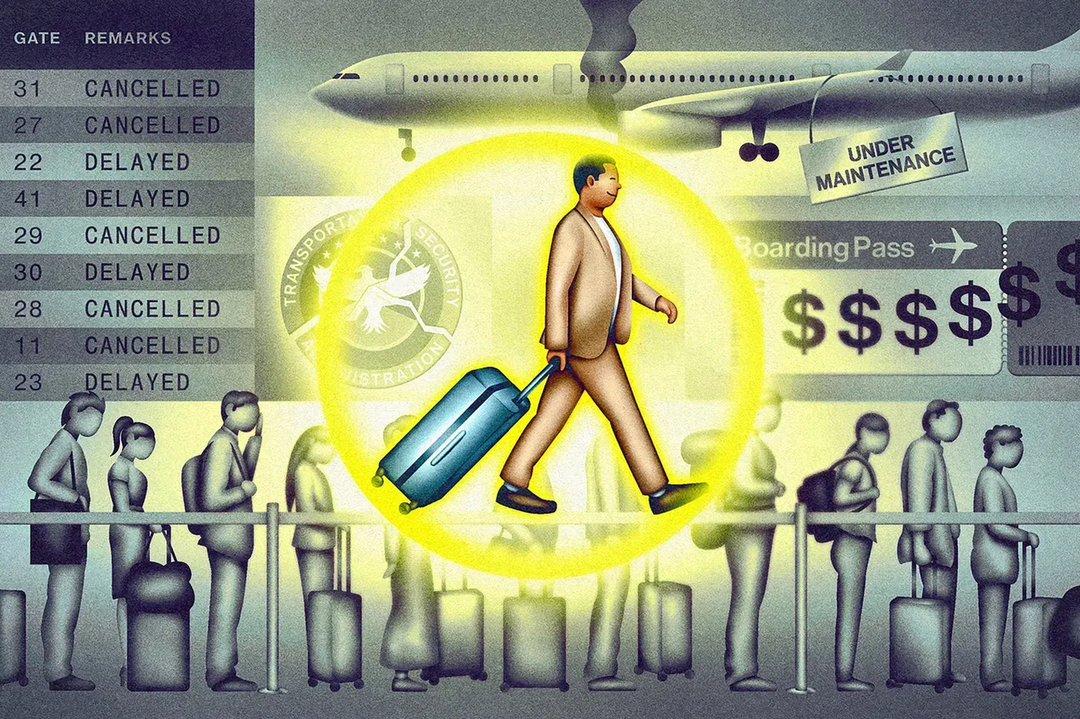
Illustration: Rob Vargas
Takeaways
by Bloomberg AI
- Travel has become an exercise in optimization and risk hedging, with many expecting to spend more on vacations in 2026 due to inflation and geopolitical instability.
- To navigate the system, it’s recommended to choose flexibility over loyalty, avoid the status trap, and look for value mismatches, such as luxury hotels versus high-end cruises.
- Travelers can also book and then keep checking for price drops, travel on the margins of peak season, and talk to a human, such as a travel adviser, to get real-time problem solving during disruptions.
Travel has split into two systems: one for people who know how to navigate a dysfunctional industry, and one for everyone else. What was once a straightforward purchase — go to an airline’s website, buy a ticket, go on your trip — is now an exercise in optimization and risk hedging.
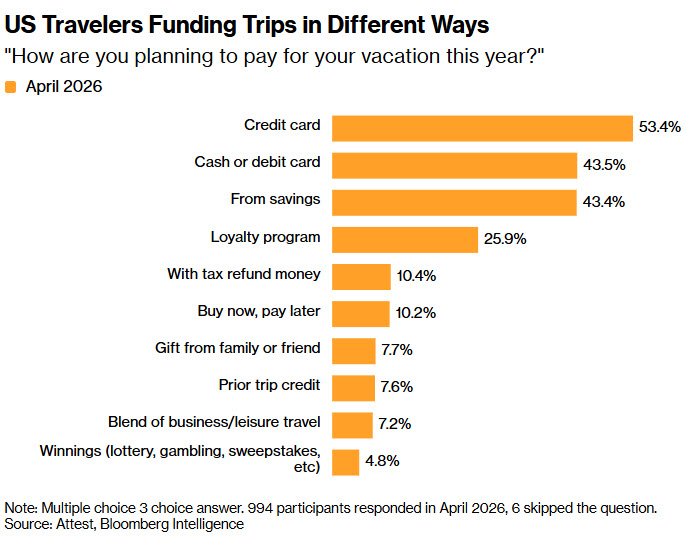
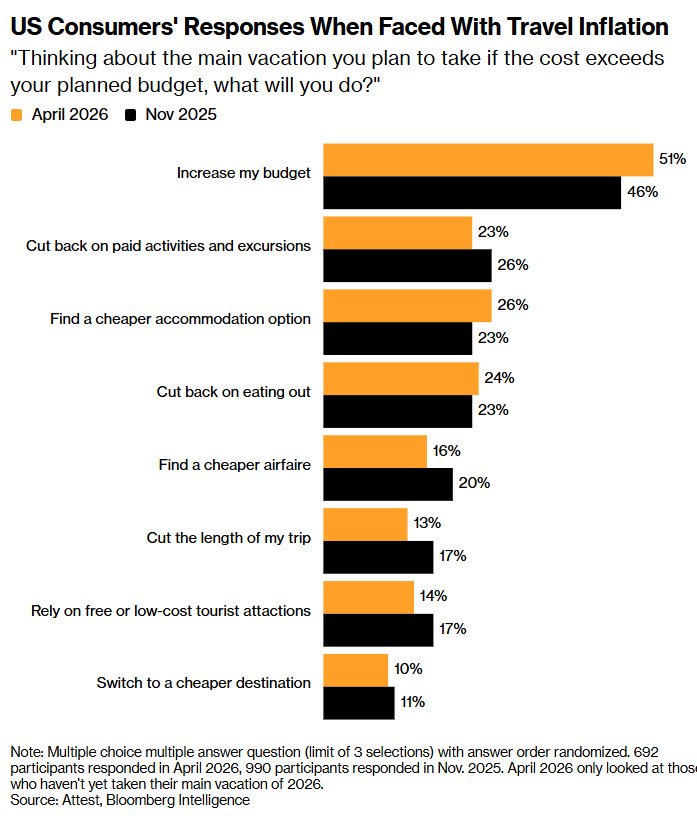
According to Bloomberg Intelligence, which surveyed the 2026 vacation plans of 1,000 adults, 66% expect to spend more on vacations in 2026 than they did the year prior. That’s happening even as many are staying closer to home, citing safety concerns tied to geopolitical instability. For lower-income travelers, higher costs are largely unavoidable, driven by inflation. Higher earners, meanwhile, are trading up as midrange options disappear. Some 43% of respondents say they’re tapping savings to fund trips, while 10% are using buy-now-pay-later financing, proof that demand for travel isn’t weakening, though it could be financed in more precarious ways.
Meanwhile, the experience itself is growing more volatile. Government shutdown threats, airport congestion, overtourism, loyalty program devaluations, fuel shortages and last-minute schedule changes have turned even routine trips into logistical puzzles.
You don’t win by spending more. You win by understanding where the system can still bend in your favor.
Choose Flexibility Over Loyalty
Racking up elite status and miles with an airline may seem like a no-brainer, but Brian Kelly, founder of The Points Guy, calls this “the airline hamster wheel.”
At a live taping of Bloomberg Businessweek’s Everybody’s Business, Kelly said using a credit card with transferable points — such as American Express Membership Rewards, Chase Ultimate Rewards, Capital One miles — is the smarter play than locking yourself into a single airline. You’ll be able to choose the best redemption rates across carriers and book whichever program is cheapest for any given route.
Everybody’s Business
Most of these cards also come with lounge access at airports as well as other travel perks, Kelly said. For example, the Capital One Venture X has a $395 annual fee, though it comes with $300 in free travel, 10,000 miles, and lounge access for the primary card holder. “If you do the math with me, the Capital One Venture X pays you $5 a year to get lounge access,” Kelly said.
Avoid the Status Trap
Elite status with an airline increasingly requires $15,000 to $20,000 in annual spending, with fewer meaningful upgrades in return. For many travelers, that math no longer works in their favor.
“I don’t care about elite status,” Kelly said. “I will fly flex.”
Tools like Point.me and Seats.aero can help travelers comparison-shop award pricing. That same flight from New York to Paris can cost dramatically different amounts of miles depending on which program you book through, so make sure to check and optimize before booking.
Look for Value Mismatches
Some of the best values in travel right now come from pricing distortions where one category hasn’t caught up to inflation in another.
Luxury hotels in Europe’s most popular destinations routinely top $1,000 to $2,000 a night in peak season. High-end cruises, by contrast, can deliver a comparable experience for a fraction of that cost, often with food, excursions and amenities bundled in. A suite on a newer luxury line like Explora Journeys can run about $600 a night, for example, while Ritz-Carlton’s Yacht Collection averages closer to $1,000 and is all-inclusive, with butler service and private terraces. On land, that price might only cover the room.
Premium trains like the Rocky Mountaineer in Canada are another option that bundles lodging, meals and transportation into a single price — often around $500 a day — turning what would be a multi-line-item trip into a predictable, all-in cost.
Even flying private can be more affordable than you think. While chartering a jet still runs into the tens of thousands, per-seat pricing on semi-private operators can be far closer to commercial first class than most travelers assume, and you’re flying out of private terminals, with effectively no TSA. The most affordable option and the one with the widest route network is JSX, which connects some 26 airports in the US and Mexico. It’s not unusual to find one-way private flights from New York to Miami priced around $650 — barely above what you’d pay for the same journey in business class on a commercial US carrier.
Book, Then Keep Checking
For those who book and walk away, you’re leaving money on the table.
Most US airlines now allow free changes or cancellations on award tickets, effectively turning points bookings into flexible placeholders. If a price drops, or more seats open up at lower mileage levels, you can rebook and reclaim the difference. Check the same portal you booked on at the airline’s website or app to monitor prices.
“In the week of travel, if there are open seats on the plane, they drop to the ‘saver level,’” Kelly said. “Keep checking and get your miles back.”
Leigh Rowan, founder of Savanti Travel, says the tactic can pay off even for travelers booking with cash — at least if your booking is with Southwest Airlines. “It sounds absurd in today’s economy,” Rowan says, “but if your rate has dropped on a Southwest ticket, they’ll let you reticket and save the rate difference as a credit.”
Travel on the Margins of a Peak Season
Even within peak periods, pricing varies sharply.
Late summer — particularly mid-August through early September — offers a window where demand softens as some schools return to session. Domestic fares can drop by close to 10% during this period, while international flights may fall significantly more.
Departure times matter, too. Early morning flights are typically cheaper, less delayed and less crowded than those later in the day.
Old rules, like booking on a Tuesday, have largely disappeared in an era of algorithmic pricing. Timing now matters less at purchase and more in when and how you choose to travel.
Talk to a Human
Travel advisers often cost nothing to the consumer, earning commissions from hotels and cruise lines while providing perks like upgrades, free breakfast or resort credits. Some premium travel credit cards also have travel services that function similarly to travel agents, primarily through online travel portals and 24/7 concierge services.
More importantly, they offer real-time problem solving during disruptions. AI travel can’t yet compete with the value of human intervention when things go wrong — and having someone real to vent to.
Finding the right travel agent can be daunting, particularly as a wave of newcomers enters the market. For travelers planning a destination-specific trip that calls for deep expertise, Wendy Perrin’s WOW list or Travel and Leisure’s A List are reliable starting points to find advisers with specialized knowledge. Those looking for a generalist or someone who can help across a range of trips and needs should explore Fora or Virtuoso.
Buy Your Way Out of Bottlenecks
Fast-track airport services can be a worthy investment. They typically cost around $100 per person and expedite security, immigration or customs at congested hubs, particularly in Europe where new biometric systems have added confusion.
The downside is booking these services can be surprisingly opaque. The safest route is often through a hotel concierge, who can vet providers and sometimes secure preferential access or pricing. Travelers without concierge access may need to do more legwork, piecing together recommendations and reviews online to find reputable operators. Another workaround: Call a well-regarded luxury hotel at your destination and ask which provider they recommend. Even if you’re not a guest, concierges will sometimes point travelers in the right direction.
Travelers can also sidestep lines to get into airport lounges. Rowan recommends downloading lounge-access apps in advance, such as the Amex app for Centurion lounges, which lets travelers join the queue before they even arrive at the airport. This will help you secure a spot and generate a QR code for entry ahead of time.
Be Proactive About Disruptions
Paul Tumpowsky, travel adviser and chief revenue officer at Fora, says he expects this summer’s European travel disruptions to hit shorter, high-frequency flights hardest, amid forecasts of fuel shortages across the continent. He recommends that travelers treat multi-city European vacations as “open-jaw” trips — say, flying into London and out of Amsterdam while traveling between cities independently. That way, if any flights get canceled, they can book on another carrier.
And when flight schedules look shaky, Tumpowsky says travelers may want to rethink the default assumption that every leg requires a plane ticket. “I would also consider the idea of taking trains,” Tumpowsky suggests. “I think they are going to be much more reliable this summer around Europe.”
Kelly’s biggest piece of advice about handling delays and cancellations is that waiting for changes to be announced is often too late.
“The second I think my flight might be canceled, I book backup options using points,” Kelly said. If he doesn’t need them, he’ll cancel for free, but usually it means he has a seat without waiting in a rebooking line.
Because many award bookings are refundable, this strategy allows travelers to hedge against disruptions without additional cost, provided they act early, before remaining seats disappear. It can also be your own hack on travel insurance at a time when cancel-for-any-reason (CFAR) policies often cost up to 18% of a trip’s total price with reimbursements capped around 75%.
“Being on the offense is how you win at the points game,” Kelly said.
© 2026 Bloomberg L.P.